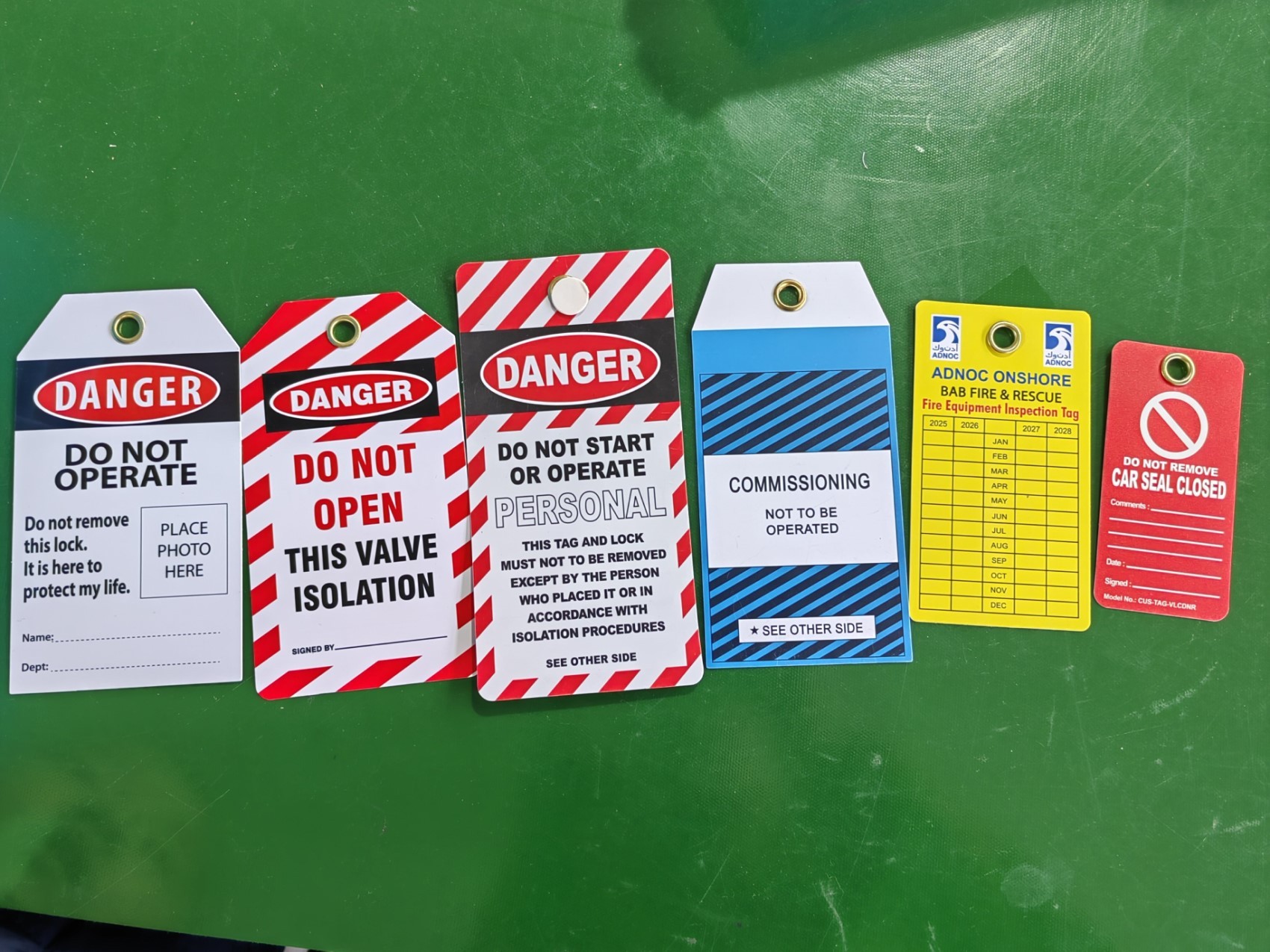
Safety protocols in industrial environments don’t tolerate ambiguity. When it comes to controlling hazardous energy during maintenance or servicing, a single misstep can result in catastrophic injury—or worse. Lockout tagout (LOTO) is a foundational safety practice, and at the heart of every effective LOTO program are the tags used to communicate isolation status.
Yet too many facilities rely on generic, one-size-fits-all lockout tags. These off-the-shelf solutions may meet minimum compliance standards, but they often fail under real-world conditions. That’s where custom lockout tagout tags come in—not as a luxury, but as a precision tool for safety clarity.
The Hidden Flaw in Standard LOTO Tags
Standard lockout tags are cheap, widely available, and OSHA-compliant on paper. But compliance isn’t the same as effectiveness. Generic tags typically feature boilerplate text like “Do Not Operate” or “Locked Out – Authorized Personnel Only.” While technically valid, they leave critical questions unanswered:
- Who applied the lock?
- Which machine or energy source is isolated?
- When was the lockout initiated?
- What procedure is being performed?
In a fast-paced maintenance environment, these missing details create confusion. A mechanic rushing between stations might hesitate at a tag with no context. A supervisor auditing safety procedures sees a tag but can’t verify accountability. Worse, contractors unfamiliar with internal systems may misinterpret the scope of the lockout.
Custom tags eliminate this ambiguity by embedding essential information directly on the tag—making them not just compliant, but intelligent.
Why Customization Improves Safety and Workflow
Custom lockout tagout tags are more than personalized labels—they’re workflow enhancers. When designed with operational reality in mind, they reduce human error, speed up communication, and strengthen audit readiness.
#### Precision in Hazard Communication
A custom tag for a hydraulic press line might read:
LOCKED OUT BY: J. Rivera (Maintenance Tech #214) EQUIPMENT ID: HP-7B Press Station ENERGY SOURCE: Hydraulic & Electrical PROCEDURE: Cylinder Seal Replacement START TIME: 08:15 AM, 04/10 AUTHORIZED RELEASE: Shift Supervisor Only
This level of detail transforms a passive warning into an active safety document. Anyone approaching the machine—whether a coworker, safety officer, or third-party inspector—immediately understands the context.
#### Reduced Miscommunication During Shift Changes
One of the most dangerous moments in any LOTO process is shift turnover. A night technician may not recognize who applied a lock earlier in the day. With custom tags that include employee ID, department, and work description, the incoming team can make informed decisions—without guessing or bypassing protocol.
#### Enhanced Accountability and Audit Readiness
OSHA doesn’t require custom tags, but it does require that lockout procedures be “understandable to all affected employees.” During inspections, auditors look for clear documentation of energy control. Custom tags serve as real-time records of compliance.
Facilities using custom LOTO systems often report fewer non-conformances during audits. The reason? The tags themselves become part of the evidence trail.
Common Mistakes When Designing Custom LOTO Tags
Even well-intentioned customization can backfire if not done correctly. Here are recurring pitfalls to avoid:
#### 1. Overloading the Tag with Text
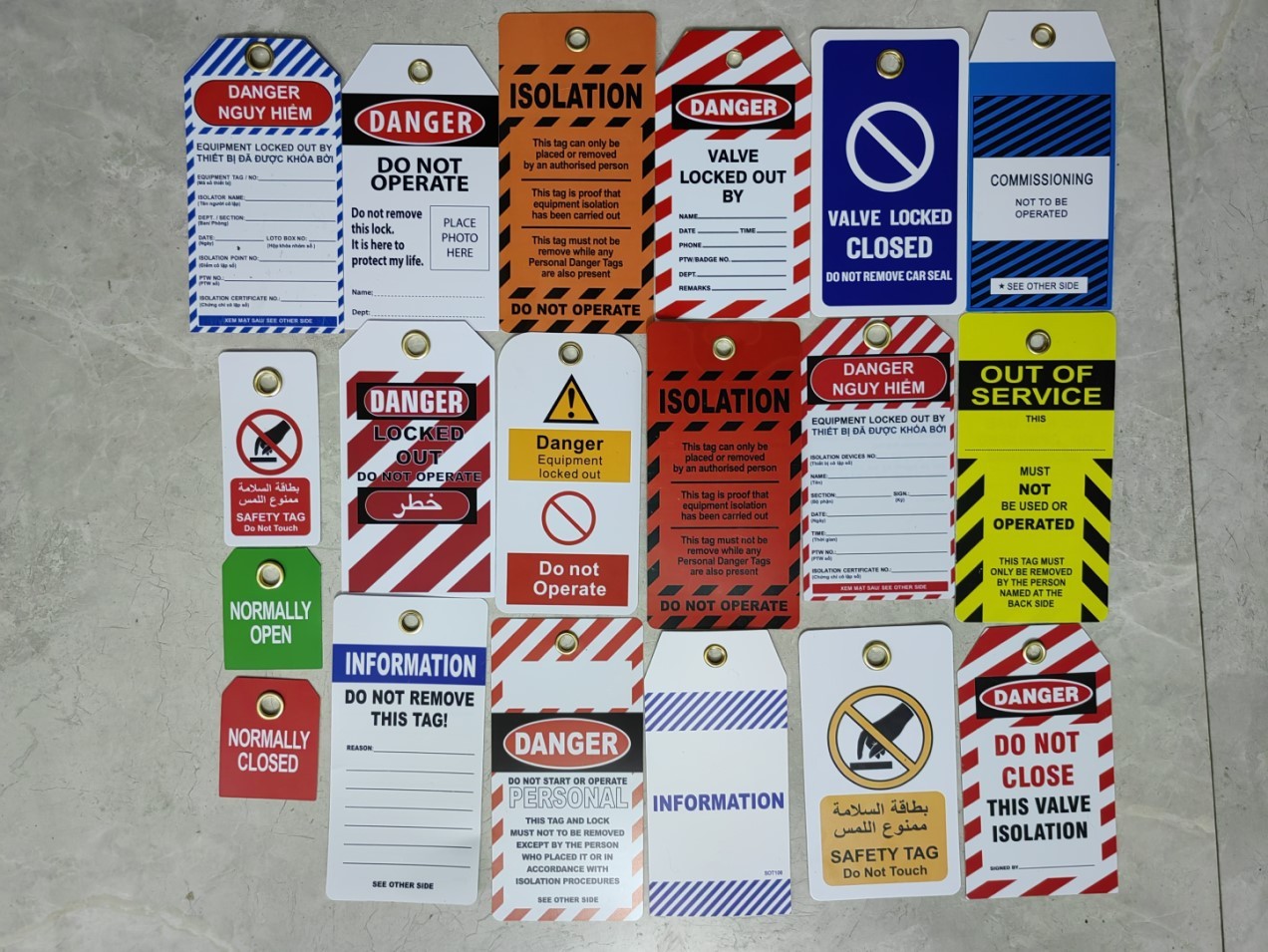
More information isn’t always better. A cluttered tag with 10 fields can be harder to read than a simple generic one. Focus on the 4–6 most critical data points: name, ID, equipment, energy type, procedure, and time.
#### 2. Using Non-Durable Materials
Custom tags printed on flimsy paper or low-grade plastic won’t survive industrial environments. Exposure to oil, moisture, UV light, or abrasion can render them unreadable within hours. Opt for weather-resistant, high-tensile materials like polyester or laminated vinyl.
#### 3. Ignoring Multilingual Needs
In diverse workplaces, English-only tags fail to meet the “understandable” requirement. OSHA permits multilingual tags, and in many plants, dual-language (e.g., English/Spanish) tags are essential. Custom design allows for seamless integration of multiple languages without sacrificing layout.
#### 4. Skipping Standardization
Custom doesn’t mean chaotic. Each department might want its own tag style, but inconsistency breeds confusion. Establish a company-wide template with room for variable fields. This balances personalization with uniformity.
Real-World Use Cases: Where Custom Tags Make the Difference
#### Case 1: Chemical Processing Plant
A refinery in Texas used generic red tags across 120 isolation points. During an emergency shutdown, a technician mistakenly released a lock because the tag didn’t specify which valve it referred to. After switching to custom tags with equipment codes and QR codes linking to work orders, misoperations dropped by 80%.
#### Case 2: Automotive Assembly Line
On a high-frequency production line, maintenance teams perform dozens of brief servicing tasks daily. Standard tags caused delays—workers had to cross-check logs to verify lockouts. Custom tags with pre-printed work codes and shift slots reduced verification time and cut downtime by 15 minutes per shift.
#### Case 3: Food Processing Facility
Wet environments degraded paper tags within hours. The facility switched to waterproof, chemical-resistant custom tags with pictograms indicating energy types (e.g., steam, electrical). The new system passed OSHA inspection with zero citations related to LOTO.
Materials and Features That Define High-Performance Custom Tags
| -------- | -------- |
|---|---|
| Tear-proof synthetic materials | Survives contact with sharp tools or machinery |
| Pre-printed fields | Guides accurate, consistent data entry |
| Barcodes or QR codes | Links to digital work orders or safety logs |
| Write-on/wipe-off surface | Enables reuse without reprinting |
| Perforated bottom section | Allows removal for record-keeping while tag stays in place |
Some facilities go further by integrating RFID-enabled tags that sync with digital LOTO software, providing real-time visibility into lockout status across a plant.
Top 5 Providers of Custom Lockout Tagout Tags For businesses ready to upgrade, here are five reputable suppliers offering high-quality custom LOTO solutions:
- Brady Corporation
- - Offers full customization with barcode integration
- - Wide range of durable materials (including chem-resistant)
- - Online design tool for instant preview and ordering
- Grainger
- - Quick-turn custom printing with OSHA-compliant templates
- - Bulk pricing for large facilities
- - Strong inventory of blank and pre-designed tag stock
- Seton
- - Specializes in safety signage and LOTO systems
- - Multilingual tag options
- - Free design assistance and sample kits

- Master Lock
- - Known for locks, but also provides custom tag solutions
- - Tags compatible with their lockout hasps and devices
- - Mobile app integration for digital tracking
- Justrite
- - Focus on industrial and manufacturing safety
- - Heavy-duty tag materials for extreme environments
- - Custom shapes and sizes beyond standard rectangles
Each provider offers slightly different strengths—Brady for tech integration, Grainger for speed, Seton for service. Choose based on your facility’s scale, environment, and integration needs.
Integrating Custom Tags Into Your LOTO Program
Custom tags aren’t a standalone fix. They work best as part of a broader energy control strategy. Follow these steps for seamless adoption:
- Audit your current LOTO process
- Identify where communication gaps exist. Are tags frequently left blank? Are lockouts misunderstood during audits?
- Define required fields
- Collaborate with maintenance, safety, and operations teams to determine the minimum necessary information.
- Choose durable materials
- Match the tag’s construction to the environment—indoor, outdoor, wet, oily, high-UV, etc.
- Train employees
- Explain why the new tags matter. Demonstrate how to fill them out completely and consistently.
- Pilot test in one department
- Roll out custom tags in a single area first. Gather feedback and refine before facility-wide deployment.
- Update written LOTO procedures
- Reference the new tags in your official energy control program. Ensure they’re included in training materials and audits.
The Bottom Line: Clarity Saves Lives
Custom lockout tagout tags are more than a compliance upgrade—they’re a culture upgrade. When every tag clearly communicates who, what, when, and why, you reduce risk, improve efficiency, and reinforce a mindset where safety isn’t assumed, but proven.
In high-stakes environments, the difference between a good safety program and a great one often comes down to details. The tag on a locked valve might seem small. But in the moment it prevents a mistake, it becomes everything.
Equip your team with custom lockout tagout tags that do more than warn—they inform, they verify, and they protect.
Frequently Asked Questions
What information should be on a custom lockout tagout tag? At minimum: employee name, ID or department, equipment identifier, energy type (electrical, hydraulic, etc.), work being performed, and start time. Optional: QR code, supervisor approval field.
Are custom LOTO tags OSHA compliant? Yes, as long as they meet OSHA 1910.147 requirements: durable, readable, standardized, and containing a warning message. Customization enhances compliance by improving clarity.
Can custom tags be reused? Some are designed for single use; others have write-on/wipe-off surfaces for reuse. Reusable tags must be cleaned and reset before each use to prevent confusion.
Do custom tags work with digital LOTO systems? Yes. Many custom tags include barcodes, QR codes, or RFID chips that integrate with digital lockout software for real-time tracking.
How much do custom LOTO tags cost? Pricing varies. Basic custom tags start at $0.50–$1.50 each in bulk. Advanced versions with QR codes or RFID can cost $2–$5. Volume discounts are common.
Can I design my own custom LOTO tag? Most suppliers offer online design tools. You can upload logos, choose layouts, and preview tags before ordering. Templates ensure OSHA alignment.
What’s the best material for custom lockout tags? Polyester, laminated vinyl, or polypropylene for durability. Choose based on exposure to chemicals, moisture, or sunlight.
FAQ
What should you look for in Custom Lockout Tagout Tags: Why One-Size-Doesn’t Fit All? Focus on relevance, practical value, and how well the solution matches real user intent.
Is Custom Lockout Tagout Tags: Why One-Size-Doesn’t Fit All suitable for beginners? That depends on the workflow, but a clear step-by-step approach usually makes it easier to start.
How do you compare options around Custom Lockout Tagout Tags: Why One-Size-Doesn’t Fit All? Compare features, trust signals, limitations, pricing, and ease of implementation.
What mistakes should you avoid? Avoid generic choices, weak validation, and decisions based only on marketing claims.
What is the next best step? Shortlist the most relevant options, validate them quickly, and refine from real-world results.