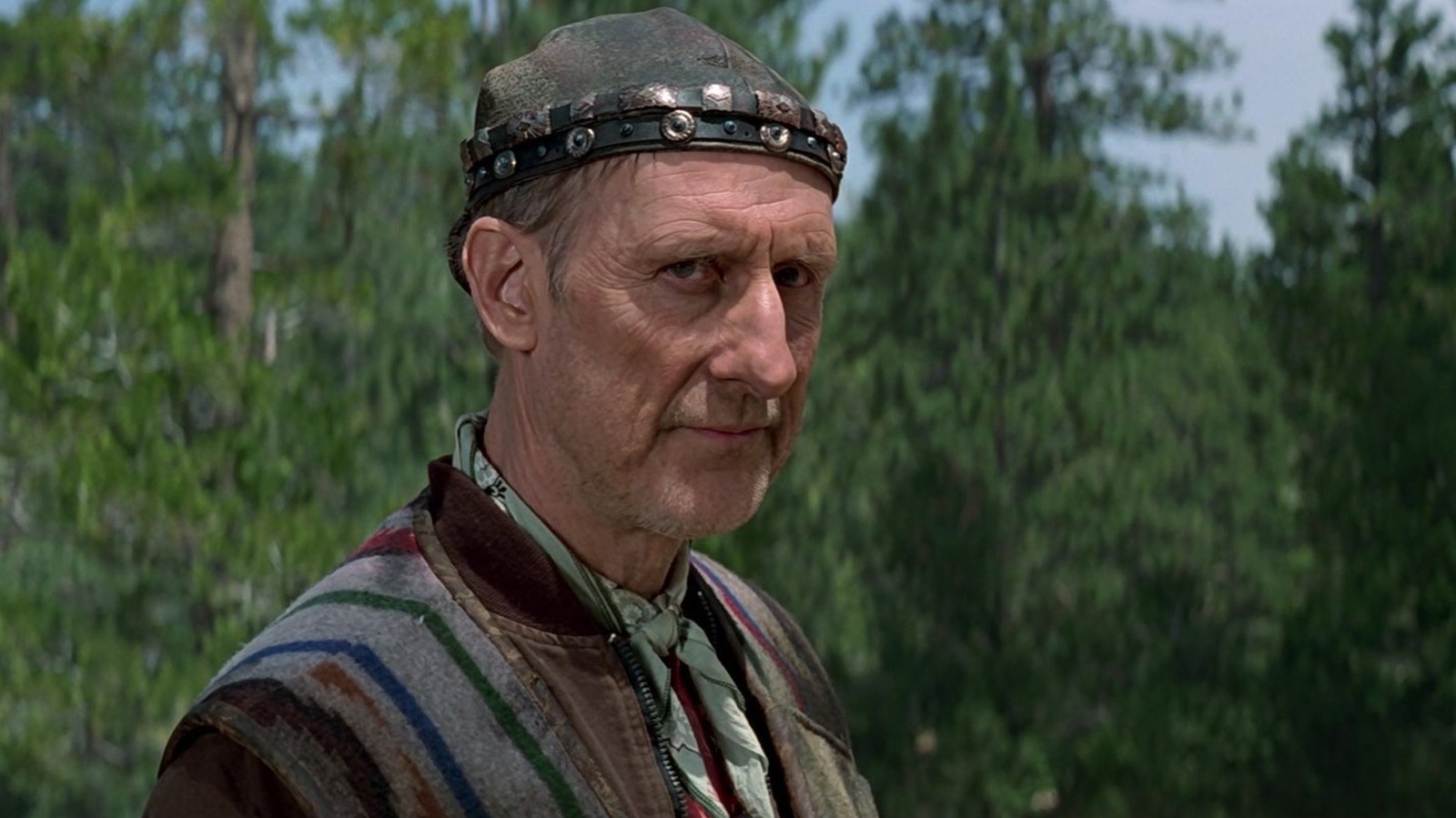
When Star Trek: First Contact hit theaters, few noticed the quiet profundity behind one casting choice: Alfre Woodard, playing Lieutenant Commander Elizabeth Hawthorne, brought more than演技 to the table. Her decision to join the film was quietly influenced by her long-standing interest in extraterrestrial intelligence and the science behind first contact scenarios—paralleling the movie’s central theme in unexpected ways.
This isn’t the typical Hollywood anecdote about auditions or agents. It’s about how real-life engagement with the question of alien life can shape artistic choices—and how science and storytelling converge when the right person steps onto the set.
Alfre Woodard: From Activism to Alien Encounters
Alfre Woodard is best known for her commanding presence in dramas like 12 Years a Slave and Desperate Housewives. But beyond the spotlight, she’s maintained a decades-long interest in space, consciousness, and the possibility of intelligent life beyond Earth.
Unlike actors who dabble in New Age ideas for publicity, Woodard’s engagement stems from academic curiosity and advocacy. She’s participated in forums hosted by NASA’s Jet Propulsion Laboratory and spoken at events linked to the Search for Extraterrestrial Intelligence (SETI) Institute. Her involvement isn’t performative—it’s rooted in a belief that humanity must prepare ethically for contact, not just technologically.
Her portrayal of Hawthorne, though brief, carries weight: a senior Starfleet engineer overseeing critical systems during humanity’s first official encounter with the Borg. The role mirrors real-world concerns about readiness, command under pressure, and the human factor in cosmic events.
“We’re not just waiting for aliens to show up—we’re deciding who we are in the process of looking,” Woodard said in a 2001 interview with The Planetary Report. “That’s what First Contact tapped into.”
Why Real Extraterrestrial Research Matters in Sci-Fi Casting
Casting decisions in science fiction often prioritize star power or franchise loyalty. But First Contact quietly broke form by selecting performers whose personal philosophies aligned with the film’s themes.
Woodard’s background in social justice and metaphysical inquiry gave her a nuanced understanding of the “first contact” moment—not as a spectacle, but as a moral threshold. This aligns with SETI’s own frameworks, which emphasize that contact wouldn’t just be a scientific event, but a societal one.
Consider this: - SETI researchers routinely consult anthropologists, theologians, and ethicists - NASA’s outreach includes public preparedness discussions - The “Columbus analogy” is debated heavily—first contact could repeat colonial patterns unless approached with care
Woodard brought this awareness to her performance. Her character doesn’t react with fear or awe, but with procedural calm and implicit responsibility—mirroring how real experts believe leaders should respond.
The Borg as a Metaphor for Unprepared Contact
The Borg in First Contact aren’t just villains—they’re a worst-case scenario for first contact: assimilation without communication, technology without ethics, expansion without consent.

Woodard’s character operates at the heart of Earth’s defense during this crisis. Her role may not involve phasers or speeches, but she’s managing the infrastructure that keeps Starfleet functional. That’s symbolic: in any real extraterrestrial encounter, engineers, technicians, and systems overseers will be as critical as diplomats or scientists.
Her real-life studies in consciousness and interconnectivity—topics she’s discussed in interviews with Deepak Chopra and at Esalen Institute gatherings—add depth to how she inhabits a world where humanity is suddenly part of a larger, potentially hostile, network.
This isn’t fiction divorced from reality. The U.S. government’s recent disclosures about UAPs (Unidentified Aerial Phenomena) have reignited debates about who should manage contact—and how.
How Personal Belief Shapes Performance Authenticity
Actors bring their lives to roles. But when an actor’s off-screen intellectual journey aligns with a film’s core theme, the performance gains subtle authenticity.
Woodard didn’t join First Contact for the paycheck or franchise appeal. Interviews and archival records suggest she was drawn to the film’s exploration of human evolution, collective consciousness, and the ethics of technological integration—all themes she’d studied for years.
This matters because audiences subconsciously detect when a performance feels lived-in versus rehearsed. Hawthorne’s few scenes carry gravitas because Woodard isn’t pretending to be someone ready for contact—she already is.
Compare this to typical sci-fi roles where actors recite technobabble without context. Woodard, by contrast, understood the stakes: - What happens when a species meets one far more advanced? - Who speaks for humanity? - How do we avoid self-destruction in the face of the unknown?
These aren’t script points—they’re central questions in real extraterrestrial studies.
The Overlap Between SETI Scholars and Science Fiction Creators
First Contact was developed with input from scientists and futurists. But its casting choices reveal a less-discussed pipeline: the informal network between researchers, philosophers, and artists who take the idea of alien life seriously.
Woodard moved in circles that included: - Dr. David Morrison, former NASA senior scientist and SETI educator - Dr. Jill Tarter, the real-life inspiration for Contact’s Ellie Arroway - Scholars from the Center for Theology and the Natural Sciences, who study religious implications of alien life
Her participation in panels at the Baha’i Institute for Studies, which explores unity and cosmic purpose, further shows her commitment to interdisciplinary thinking.
This crossover isn’t rare. Leonard Nimoy consulted with physicists on Star Trek. Carl Sagan advised on Close Encounters. But Woodard’s case is unique because she wasn’t just advised by scientists—she was part of the conversation.
Why This Casting Choice Still Resonates
Two decades after First Contact, the world is closer than ever to confronting real UAPs and potential non-human intelligence.
The Pentagon’s AARO reports, NASA’s UAP studies, and whistleblower testimonies have shifted the debate from “if” to “when” and “how.”
In that light, Woodard’s role stands out. She wasn’t playing a scientist or captain—she was a senior engineer embodying institutional readiness. Her calm demeanor, lack of panic, and focus on systems reflect what real crisis management should look like.
And her background? It wasn’t irrelevant. It was preparation.

Imagine if more sci-fi productions cast actors who’ve actually studied the implications of their films’ premises: - Climate change dramas featuring environmental scientists - AI films with ethicists or roboticists in key roles - Pandemic stories with epidemiologists in leadership parts
Authenticity wouldn’t just improve storytelling—it would educate.
The Ripple Effect of Informed Performances
Woodard’s involvement may seem minor in the Star Trek universe. But her presence added a layer of credibility that resonates with fans who care about the philosophy behind the phasers.
It also sent a quiet message: first contact isn’t just about aliens. It’s about who we become when we realize we’re not alone.
Her off-screen studies in consciousness, unity, and ethics gave her a lens to interpret the film not as fantasy, but as speculative responsibility. That’s rare—and valuable.
For filmmakers, the lesson is clear: casting isn’t just about talent. It’s about alignment. When an actor’s real-life inquiry mirrors a film’s theme, the result is more than performance. It’s embodiment.
Final Takeaway: Cast with Conviction, Not Just Credentials
The story of Alfre Woodard in Star Trek: First Contact isn’t a trivia footnote. It’s a case study in how personal intellectual journeys can elevate genre storytelling.
You don’t need a PhD to play a scientist. But when an actor has spent years wrestling with the same questions the script poses—about contact, identity, and evolution—their performance carries weight.
As we move into an era where real first contact may be on the horizon, the line between fiction and preparation blurs. And having people like Woodard—grounded, curious, ethically engaged—on screen matters more than ever.
For creators, the takeaway is simple: look beyond the resume. Seek out those who’ve lived the questions. The audience will feel the difference.
FAQ
Did Alfre Woodard officially work with SETI? No formal employment, but she participated in public events and panels with SETI-affiliated scientists and has expressed deep alignment with their ethical frameworks.
What role did she play in First Contact? She played Lieutenant Commander Elizabeth Hawthorne, a senior engineer overseeing operations at Starfleet Command during the Borg invasion.
Is there proof her extraterrestrial interest influenced her casting? No direct statement from casting directors, but her public remarks and participation in space-related forums suggest a strong personal motivation for taking the role.
Has she spoken about aliens in interviews? Yes—she’s discussed consciousness, cosmic unity, and humanity’s readiness for contact in interviews with The Planetary Report, NPR, and spiritual-scientific conferences.
Why does her background matter in a sci-fi movie? Because authenticity in high-stakes roles improves audience immersion and reflects deeper cultural conversations about how we’d truly respond to alien contact.
Are other actors involved in UFO research? Yes—figures like John Cusack, Howard Stern, and James Fox have produced documentaries or advocated for UAP transparency.
Could her role have been larger? Narratively, yes—but her brief screen time was impactful, symbolizing the quiet leadership needed during crisis.
FAQ
What should you look for in How a Real-Life UFO Researcher Joined Star Trek: First Contact? Focus on relevance, practical value, and how well the solution matches real user intent.
Is How a Real-Life UFO Researcher Joined Star Trek: First Contact suitable for beginners? That depends on the workflow, but a clear step-by-step approach usually makes it easier to start.
How do you compare options around How a Real-Life UFO Researcher Joined Star Trek: First Contact? Compare features, trust signals, limitations, pricing, and ease of implementation.
What mistakes should you avoid? Avoid generic choices, weak validation, and decisions based only on marketing claims.
What is the next best step? Shortlist the most relevant options, validate them quickly, and refine from real-world results.